
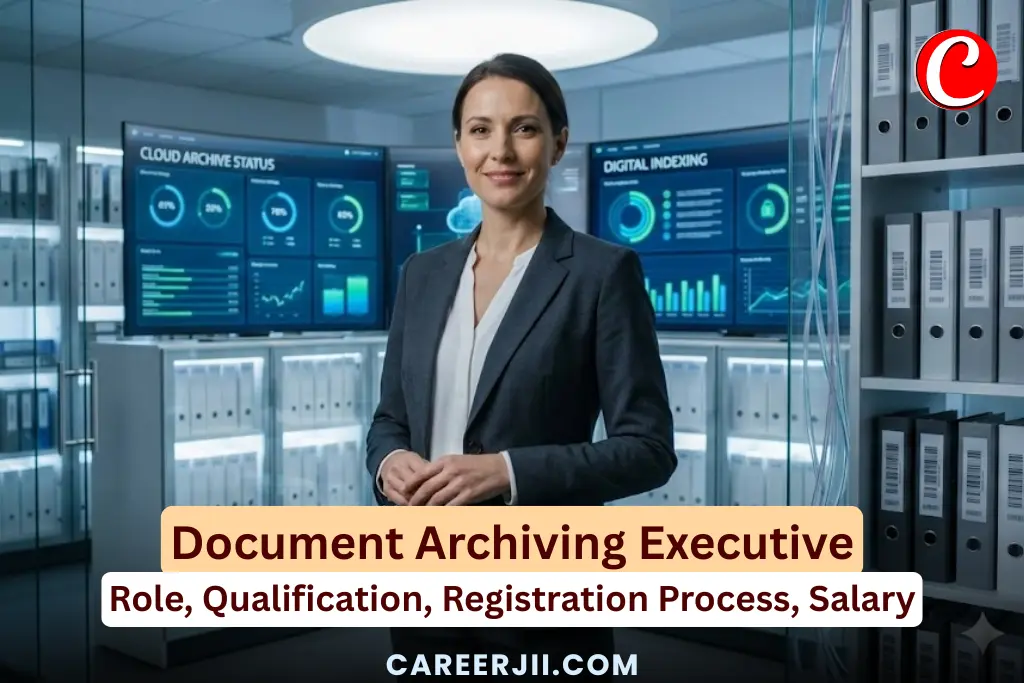
In today’s digital and compliance-driven world, Document Archiving Executives play a critical role in organizations. I have worked closely with document control, records management, and compliance teams across industries, and I can confidently say that this role is underrated but highly stable and in demand.
In this blog, I will explain everything you need to know about becoming a Document Archiving Executive, including qualifications, salary, eligibility, registration process, official portals, and real-life work experience—explained in simple language.
What Is a Document Archiving Executive?
A Document Archiving Executive is responsible for managing, organizing, storing, and protecting physical and digital records in an organization. These records may include:
- Legal documents
- Financial records
- HR files
- Medical records
- Government or compliance documents
From my experience, this role ensures that important documents are secure, retrievable, and compliant with laws.
Why Document Archiving Is Important Today
Document archiving is no longer just filing papers. It is about data security, legal compliance, and operational efficiency.
Key Reasons Organizations Need Archiving Executives
- Legal compliance with government regulations
- Protection against data loss
- Faster document retrieval
- Audit readiness
- Digital transformation support
Almost every sector needs this role:
- Healthcare
- Banking & Finance
- IT & Software
- Government offices
- Logistics & Manufacturing
Roles and Responsibilities of a Document Archiving Executive
Based on my real-world experience, here are the core responsibilities:
Daily Responsibilities
- Classifying and indexing documents
- Scanning and digitizing physical files
- Managing document retention schedules
- Ensuring data confidentiality
- Coordinating with compliance and audit teams
Advanced Responsibilities
- Implementing document management systems (DMS)
- Training staff on document handling policies
- Managing document disposal securely
- Supporting internal and external audits
Eligibility Criteria to Become a Document Archiving Executive
Minimum Eligibility (All Countries)
- Age: 18+
- Basic computer knowledge
- Understanding of data confidentiality
Preferred Background
- Commerce, Arts, IT, Library Science, or Management
- Experience in admin, HR, compliance, or records management
Educational Qualifications Required
You do not need a highly technical degree to start.
Minimum Qualification
- 12th pass (for junior roles)
Preferred Qualifications
- Bachelor’s degree (any stream)
- Diploma in:
- Records Management
- Document Control
- Information Management
Professional Certifications (Optional but Helpful)
- Document Control Certification
- Records Management Certification
- ISO 9001 Documentation Training
Skills Required for a Document Archiving Executive
From my experience, employers value skills more than degrees.
Essential Skills
- Attention to detail
- Organizational skills
- Basic MS Excel & Word
- File naming and indexing
Technical Skills
- Document Management Systems (DMS)
- Scanning and OCR tools
- Cloud storage systems
Soft Skills
- Confidentiality handling
- Communication
- Time management
Salary of a Document Archiving Executive (Country-Wise)
India
- Fresher: ₹2 – ₹4 LPA
- Experienced: ₹5 – ₹8 LPA
USA
- Entry level: $40,000 – $55,000 per year
- Experienced: $65,000 – $85,000 per year
UK
- Entry level: £22,000 – £28,000 per year
- Experienced: £35,000 – £50,000 per year
UAE
- Entry level: AED 4,000 – 6,000 per month
- Experienced: AED 8,000 – 12,000 per month
Official Registration & Business Setup (If You Want to Offer Archiving Services)
Many professionals eventually start document archiving service companies.
Registration Process in India
Required Registrations
- Business registration (Proprietorship / LLP / Pvt Ltd)
- GST Registration
- MSME (Udyam) Registration
Official Websites
- Ministry of Corporate Affairs: mca.gov.in
- GST Portal: gst.gov.in
- MSME Portal: udyamregistration.gov.in
Documents Required
- Aadhaar & PAN
- Address proof
- Bank account details
Registration Process in the USA
Required Steps
- Business registration with the state
- EIN (Employer Identification Number)
- Business bank account
Official Portals
- USA Government Portal: usa.gov
- IRS (for EIN): irs.gov
Registration Process in the UK
Required Steps
- Register as Sole Trader or Limited Company
- HMRC registration
- Data Protection registration
Official Websites
- UK Government Portal: gov.uk
- HMRC: hmrc.gov.uk
Registration Process in the UAE
Required Steps
- Trade license from Free Zone or Mainland
- MOA (if applicable)
- Office address
Official Portals
- UAE Government Portal: u.ae
- Free Zone Authorities (DMCC, IFZA, etc.)
Also Read Mailroom Sorting Assistant: Complete Career Guide with Salary
Documents Required for Registration (Common Across Countries)
- Identity proof
- Address proof
- Business activity description
- Bank details
- Data protection compliance documents
Real-Life Work Experience as a Document Archiving Executive
In my professional journey, I’ve seen companies struggle due to poor document handling. After implementing structured archiving systems, results were immediate:
- Audit issues reduced by 70%
- File retrieval time cut by more than half
- Improved compliance confidence
This role gives you job security, steady growth, and transferable skills across industries.
Career Growth Opportunities
A Document Archiving Executive can grow into:
- Document Control Manager
- Compliance Officer
- Records Management Consultant
- Information Governance Specialist
Advantages of Choosing This Career
- High demand globally
- Low entry barrier
- Stable income
- Opportunity to start your own service business
Final Thoughts
From my experience, Document Archiving Executive is a smart career choice for anyone seeking stability, growth, and global relevance. Whether you want a job or plan to start your own archiving service, this field offers strong long-term potential.
Frequently Asked Questions (FAQs)
Is Document Archiving a good career?
Yes. It offers stability, global demand, and long-term growth.
Do I need coding or IT skills?
No. Basic computer knowledge is enough.
Can I work remotely?
Many digital archiving roles offer remote or hybrid work.
Is certification mandatory?
Not mandatory, but certifications increase salary and credibility.
How long does registration take?
India: 7–15 days
USA: 5–10 days
UK: 1–7 days
UAE: 2–4 weeks